Twelve systems, one school
When a family changes its address, how many places does your school need to update?
When a student enrols, who makes sure the right information reaches admissions, the classroom, finance and the people responsible for their care?
These are ordinary tasks. How much work they create depends on how well the school’s systems work together.
The median independent school now runs about a dozen separate systems from nine suppliers. Behind each one is a job someone needs to do, information someone needs to keep up to date, and a service the school depends on.
How a school gets to twelve
Schools build up their technology over years. Admissions needs a better way to manage enquiries. Teachers need tools for their classes. Families want easier payments and clearer notices. A department finds a tool that solves an immediate problem and starts using it.
Each purchase can be sensible. Over time, though, someone has to make all those separate decisions work together.
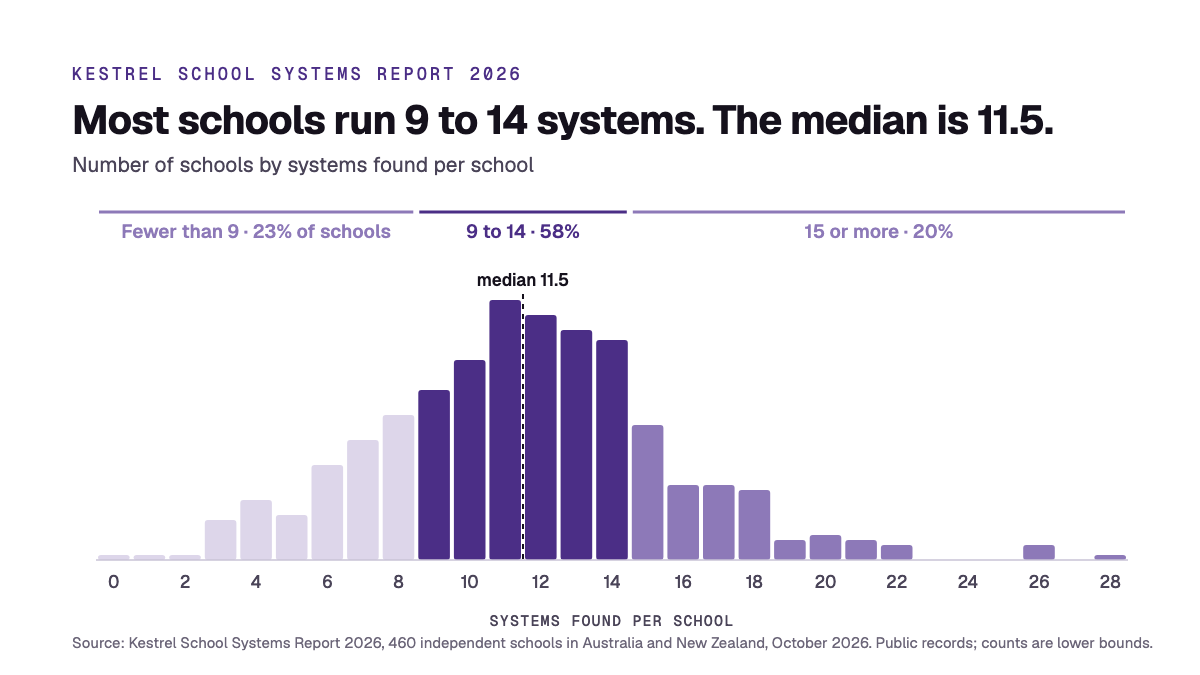
Half the schools (51%) run a dedicated admissions product beside their student system. At more than a third of schools (36%), parents use four or more separate services: a portal, a learning platform, an app, and payments or canteen accounts.
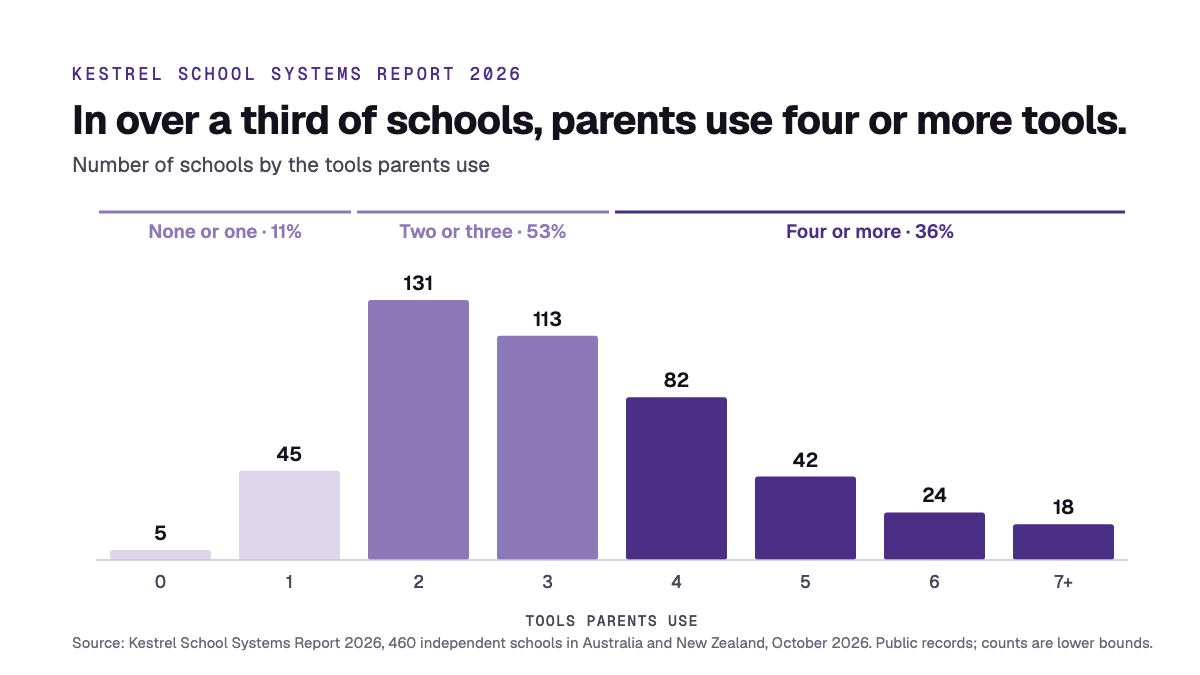
For a parent, that means working out where to find a notice, make a payment or update a detail. For your people, it means explaining the process again, checking another system, or helping a family find information the school has already sent.
People make these arrangements work each day. Their time and patience have a real cost.
The work behind the licence fees
A software budget shows what a school pays its suppliers. To understand the full cost, talk to the people who use and maintain the systems.
There are contracts to review, renewals to negotiate and suppliers to assess. Connections between systems need watching and maintaining. Access has to change each time someone joins, moves role or leaves.
Then there is the daily work of keeping information accurate. If a family’s details appear in several places, someone needs to know which record is current and how changes reach the rest. When that breaks down, people are left checking, correcting and following up by hand.
These are useful questions for a leadership team:
- When a student enrols or leaves, what does someone still update by hand?
- Where are family details held, and which record wins when two disagree?
- Who can see medical and wellbeing information, and who reviews that access?
- How much of your people’s time goes into keeping systems working together?
Single sign-on makes access easier, though each service still has its own permissions, supplier arrangements and security requirements. Software that runs on the school’s own servers adds maintenance, backups and patching for a team that is already busy.
The number of systems is a starting point. The more useful question is how much work it takes to keep them reliable.
What schools should expect from a connected system
A school should be able to update a student’s information knowing it will reach the people who need it, within the right permissions. Your people should know where to find the current record and who is responsible for it.
The value shows up in everyday work. An enrolment should move through the school without anyone entering the same details again. A change to family information should reach the relevant teams automatically. Medical and wellbeing records should be open to authorised people, with a clear record of who viewed or changed them.
Specialist tools, including finance and payroll systems, have an important place. The school needs to understand what information passes between them, how each connection is maintained, and what happens when one breaks.
Bringing more work into one platform deserves careful scrutiny too. Leaders should ask where information is stored, how permissions are managed, how the service stays available, and how easily the school can get its data back. A supplier should answer each of those questions clearly.
Start with your own school’s evidence
Research gives you a reason to look. Your school’s own daily experience should guide the decision.
List the services your people, students and families use, including those bought by individual departments. Record what each one does, what information it holds, who maintains it and when its contract renews. Expect the list to run longer than you think.
Then follow a few familiar tasks through the school: an enrolment, a change of address, a student leaving. Ask the people doing the work where they repeat steps, check conflicting information, or rely on a spreadsheet to fill a gap.
That gives you something concrete to weigh against the cost and disruption of change. A contract renewal or a required upgrade is a natural time to do it.
For the full data on what independent schools run across Australia and New Zealand, read the Kestrel School Systems Report 2026.