Co-curricular and consent
Everything that happens outside the timetable, and who said yes to it.
Seasons, activities, selection rounds and excursions, with the two questions a school gets asked about them afterwards: which adults were near the children, and who gave permission.
At a glance
Kestrel’s co-curricular module runs seasons, activities, rosters and selection rounds, checks working-with-children currency, and takes excursion consent and medical details from the student record itself, from the ask to the bus door.
Seasons and selection
Seasons, activities, rosters and selection rounds, run from one board.
Adults checked at the moment
Working-with-children currency asked when an adult is attached, with warnings ahead of a lapse.
Consent, end to end
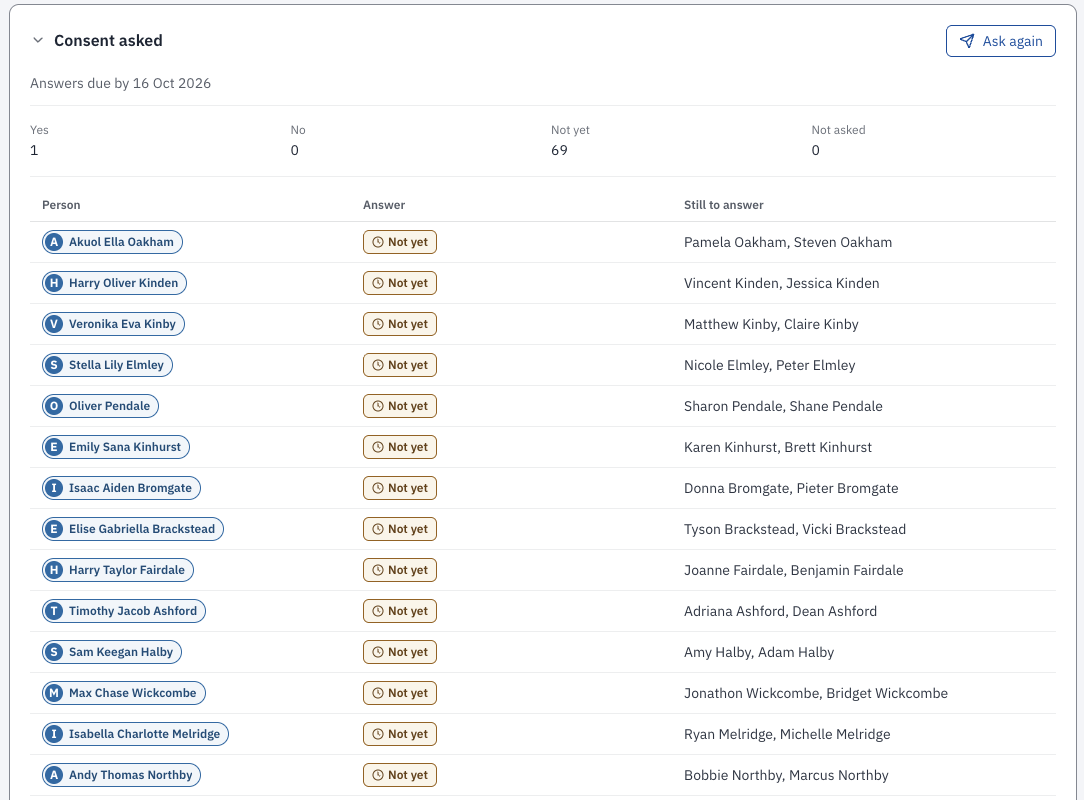
One ask to the people with parental responsibility on the day, one reminder each morning, and yes, no and not yet on the trip’s page.
Medical details, from the same record
Families confirm their child’s medical details for the trip, and the nurse approves each change into the record the camp pack prints from.
Questions schools ask
Who can give consent for an excursion?
A person with parental responsibility for the child, as recorded on the day the consent was given.
How are coaches’ working-with-children checks handled?
Currency is checked at the moment an adult is attached to an activity, with warnings ahead of a lapse.
Where do an excursion’s medical details come from?
From the student record. The trip asks each family to confirm their child’s conditions, medications and immunisation status in the family portal, the nurse approves each change into the record, and the camp pack prints from that same record.
What is kept once the bus leaves?
The bus list: each child who went, who gave the consent and the day they gave it, written at departure and unchanged by anything recorded afterwards.
How are families reminded?
One sweep each morning in the school’s own timezone sends the one reminder an ask owes that day, to the families who have not yet answered.
Show the detailHide the detail
Seasons, activities and the selection round.
A coordinator opens a season, the activities inside it, and the roster for each. Where places have to be allocated, a selection round runs from the board. It opens, it closes, and a coordinator reads the closed round, moves a child, confirms it, and sees the rosters that result.
Attendance outside the academic timetable is marked the way a lesson is. A Saturday fixture and a Tuesday period are the same question about the same child.
Which adults may be put near a child.
Working-with-children currency is held on the person rather than in a spreadsheet beside the roster, and is asked at the moment an adult is attached to an activity.
One excursion, from the ask to the bus door.
Consent is where a school’s obligations, its family structures and its court orders all arrive at once. That is why it lives on the student record itself. The family, the court orders and the medical details a trip relies on are read from one place, on the day they are needed.
Asking once
An ask is recorded once. Raising the same one again answers with the ask that already exists. While an ask is open, a new round reaches only the families not yet asked. A child added to the camp on Thursday is the one whose family hears on Thursday. The raise returns as soon as it is recorded and the sending happens behind it, so a whole-school ask is recorded in a moment.
Working it
A silence is never read as a yes. And where one parent says yes and another says no, or a yes is withdrawn, the child shows Needs review on the trip’s page with each answer, who gave it and when. A person at the school records the decision, goes or does not go, with the reason.
Medical details, from the same record.
A trip reads the child’s medical record directly, so the people taking the bus, the nurse and the roll all work from the same conditions, plans and medications.
Who may answer.
Only a person with parental responsibility for the child may give a consent about them. Kestrel asks the record who held it on the day the consent was given.
Everyone else is refused the same way, with the same code: a relative who may collect the child but holds no responsibility, a person whose responsibility has closed, a person a court order keeps away, and a person on a protected record. The office picks the giver from a list of only those who may, and a reader with the right to know is also told who was left off, and why.
A consent about something that has already begun, an excursion whose bus has left, is refused, and the ask stays open. A withdrawal tells the people relying on it: the people running the thing it names, at the consent’s own tier, naming the child and the thing and leaving the reason out.
Three decisions, made on purpose.
Bring your hardest family.
Start with the eight-minute film. Then, if you’d like, forty minutes with us on your court orders and your camp.